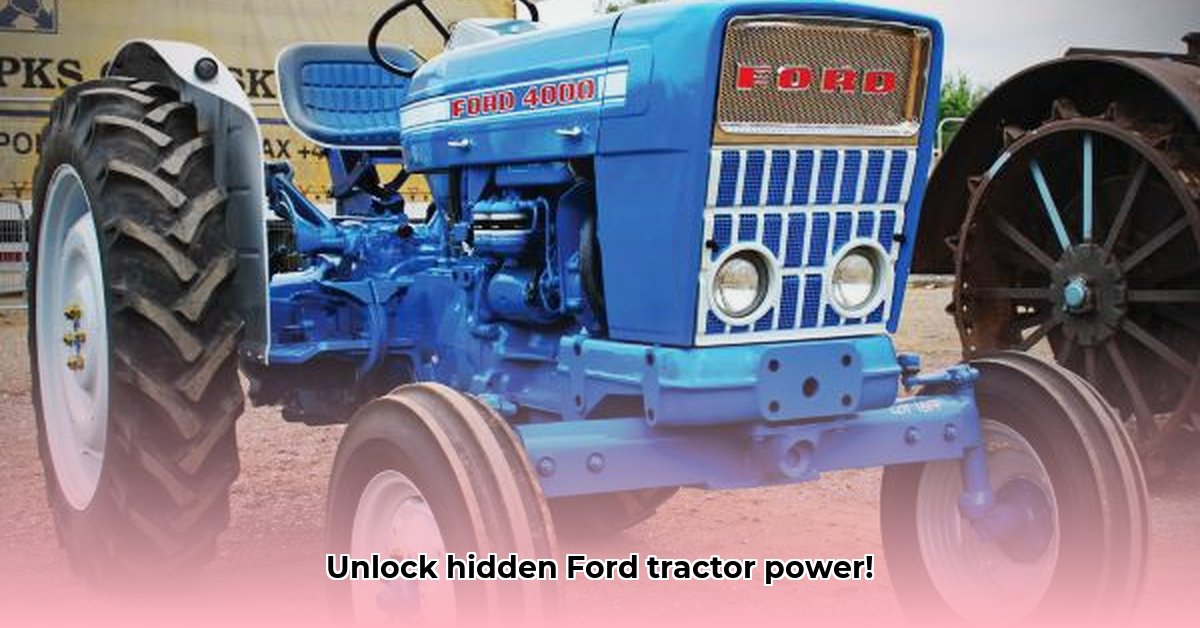
4000 Ford Tractor HP: Uncovering the Power Behind the Legend
The Ford 4000 tractor: a symbol of hardworking farmers and bountiful harvests throughout the 1960s and 70s. Its robust build and versatility made it a mainstay on farms across America. But what truly defined its capabilities? Let's delve into the horsepower and other key features that cemented its legendary status. For more on early Ford tractors, see this helpful resource.
Decoding the Ford 4000's Horsepower: A Nuance of Numbers
Determining the precise horsepower of a Ford 4000 isn't straightforward. While some sources cite approximately 45 PTO horsepower (the power delivered to attached implements), variations exist. This stems from the diverse engine options offered throughout its production run—gasoline, diesel, and even liquefied petroleum gas (LPG). Think of it like choosing an engine for a modern car; more cylinders often mean more power, but other factors significantly impact the final output. Older machinery lacked the standardized testing of today, contributing to this variance.
Wasn't the lack of standardized testing a significant limitation for assessing tractor power in the 1960s and 70s? Indeed, this historical context significantly impacts our understanding of the stated horsepower figures.
The Ford 4000's Journey: Evolution and Upgrades
The Ford 4000's decade-long production run witnessed continuous refinements. Early models were simpler, while later iterations included considerable enhancements. Power steering, for example, significantly improved maneuverability, a crucial advantage for long days in the field. The introduction of an independent PTO further boosted efficiency, allowing for smoother operation of implements like balers and combines.
Did these upgrades significantly impact a farmer's daily productivity? Absolutely. The improved ease of use and efficiency directly translated into more work accomplished in a given timeframe.
Despite refinements, even later models weren't immune to mechanical issues. Proper maintenance remained crucial to their longevity. Compared to earlier versions, however, later models boasted improved reliability and performance.
Beyond Horsepower: The Ford 4000's Defining Features
The Ford 4000's compact size for its era was a remarkable feat of engineering; it offered exceptional maneuverability in confined spaces, a boon for farmers with smaller fields or numerous obstacles. The availability of 8-speed and 10-speed transmissions allowed farmers to optimize speed for various tasks, maximizing efficiency. However, early models were limited to two-wheel drive, limiting traction in challenging conditions. Later models rectified this with four-wheel drive options. This improved performance significantly enhanced productivity and safety.
How did the availability of different transmission options benefit farmers? It allowed them to tailor the tractor's speed precisely to the task at hand, preventing overworking the engine and conserving fuel.
A Collector's Dream: Preserving a Piece of Agricultural History
Today, the Ford 4000 is highly sought after by collectors. While locating replacement parts can be challenging, its relatively simple design makes restoration feasible for mechanically inclined enthusiasts. This enduring popularity highlights its lasting impact on agriculture. While its horsepower might not impress modern standards, it represented a significant advancement in its time. For generations of farmers, the Ford 4000 was a reliable workhorse, shaping the agricultural landscape.
How to Compare Ford 4000 Tractor Models Across Production Years
Navigating the variations within the Ford 4000 series (1965-1976) requires understanding its evolution across production years. This guide aids in comparing models and finding the perfect fit.
Decoding the Ford 4000’s Evolution: A Year-by-Year Perspective
The Ford 4000 wasn't a static machine; it evolved. These variations influence performance, reliability, and ultimately, value. Critical comparison points include:
Engine Variations: Subtle engine modifications affected fuel efficiency, power delivery, and maintenance. Thorough research using manuals and historical records is essential.
Transmission Differences: Gear ratios and shifting mechanisms varied, impacting work efficiency. Research the specifics for your target production years.
Hydraulic System Upgrades: Improvements in lift capacity, speed, and responsiveness occurred over time. For some, this could be a significant factor in choosing a newer model.
Cosmetic Changes: While less crucial than mechanical aspects, cosmetic differences might hint at underlying upgrades. Observe changes in hood design, lighting, and gauges.
Power and Performance: Beyond Simple Horsepower
Focusing solely on engine horsepower is insufficient. Real-world performance hinges on:
PTO Horsepower: Prioritize the power delivered to implements, not the engine's gross horsepower.
Implement Matching: Match tractor PTO horsepower with appropriate implements.
Fuel Efficiency: Fuel costs are paramount; consider a model’s fuel economy.
Practical Tips for Comparing Ford 4000 Models: Actionable Steps
Identify Your Needs: Define your requirements based on acreage, implements, and terrain.
Gather Data: Utilize resources like TractorData.com and owner forums to assemble model-year specifics.
Detailed Examination: Inspect potential purchases for wear, leaks, and repair history.
Test Drive: When feasible, test drive different models to assess their responsiveness and maneuverability.
Cost Analysis: Balance purchase price with fuel efficiency and potential maintenance/repair costs.
Key Takeaways:
- The Ford 4000 underwent significant changes across production years.
- PTO horsepower, implement compatibility, and fuel efficiency are paramount.
- A thorough pre-purchase inspection is critical.
- Aligning your tractor choice with your farm's needs is essential.